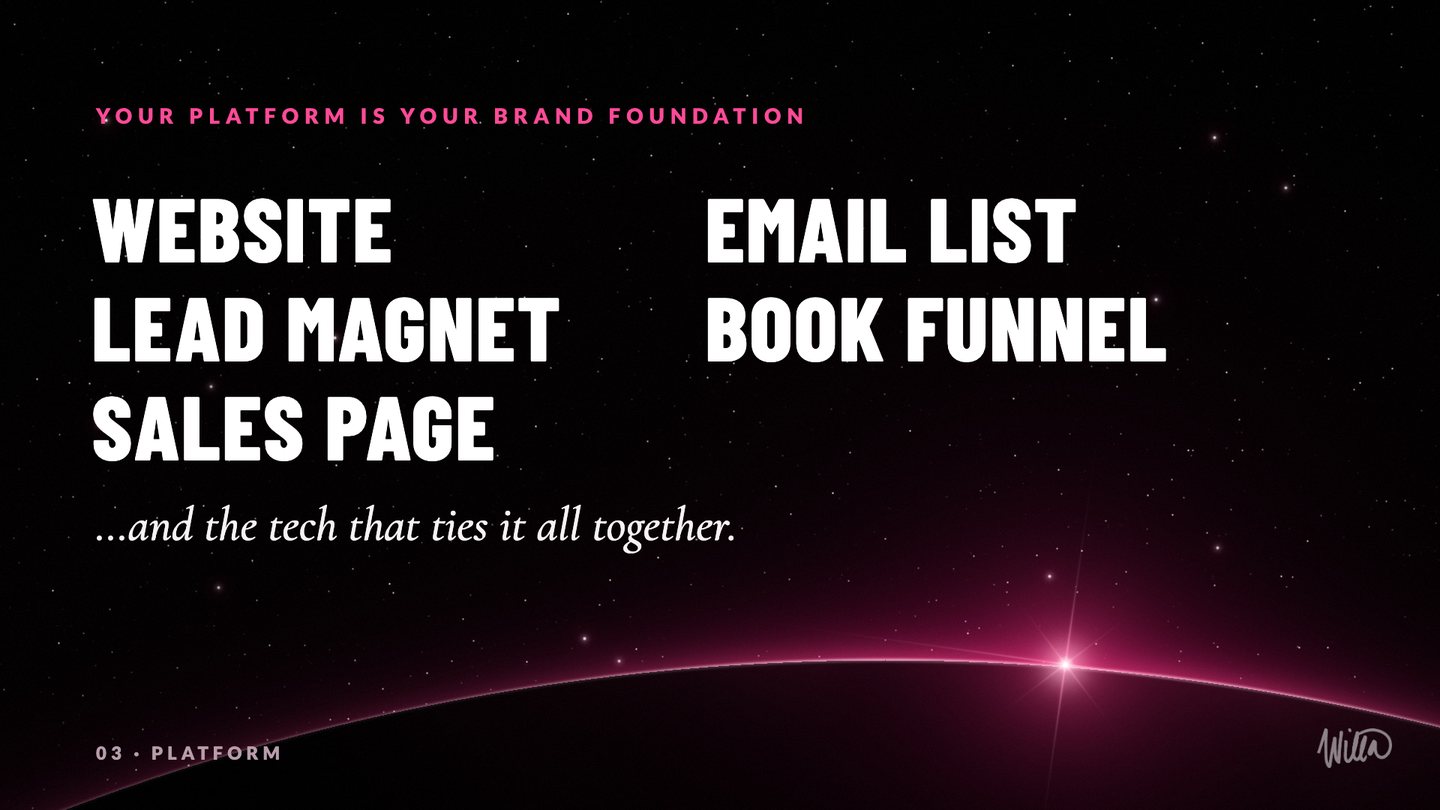
A personal brand platform is the foundation you own: your personal brand website, your lead magnet, your sales page, your email list and the tech that ties them together, built as one system. Social channels are where people find you. Your platform is where they get to know you, and where that relationship becomes a business.
What a platform includes
In my talk Brand on Fire, platform is the third of the five must-haves, and I define it plainly:
- A personal brand website: the home base that tells people who you are and why to trust you.
- A lead magnet: a useful free resource that starts a relationship.
- A sales page: one clear place for each offer.
- An email list: the audience you can reach without asking an algorithm for permission.
- A book funnel, if you're writing one.
- The tech that ties it all together: your CRM, email, checkout, calendar and courses.
What a platform isn't
The standard way to build a personal brand online is to build each piece separately. Branding over here: colors, logo, messaging. Then a different piece of software for every action. One tool to send emails, one to host your course, one to build your funnel, one for checkout. That's how I built mine, and for a long time I called those subscriptions the tuition for building a business online.
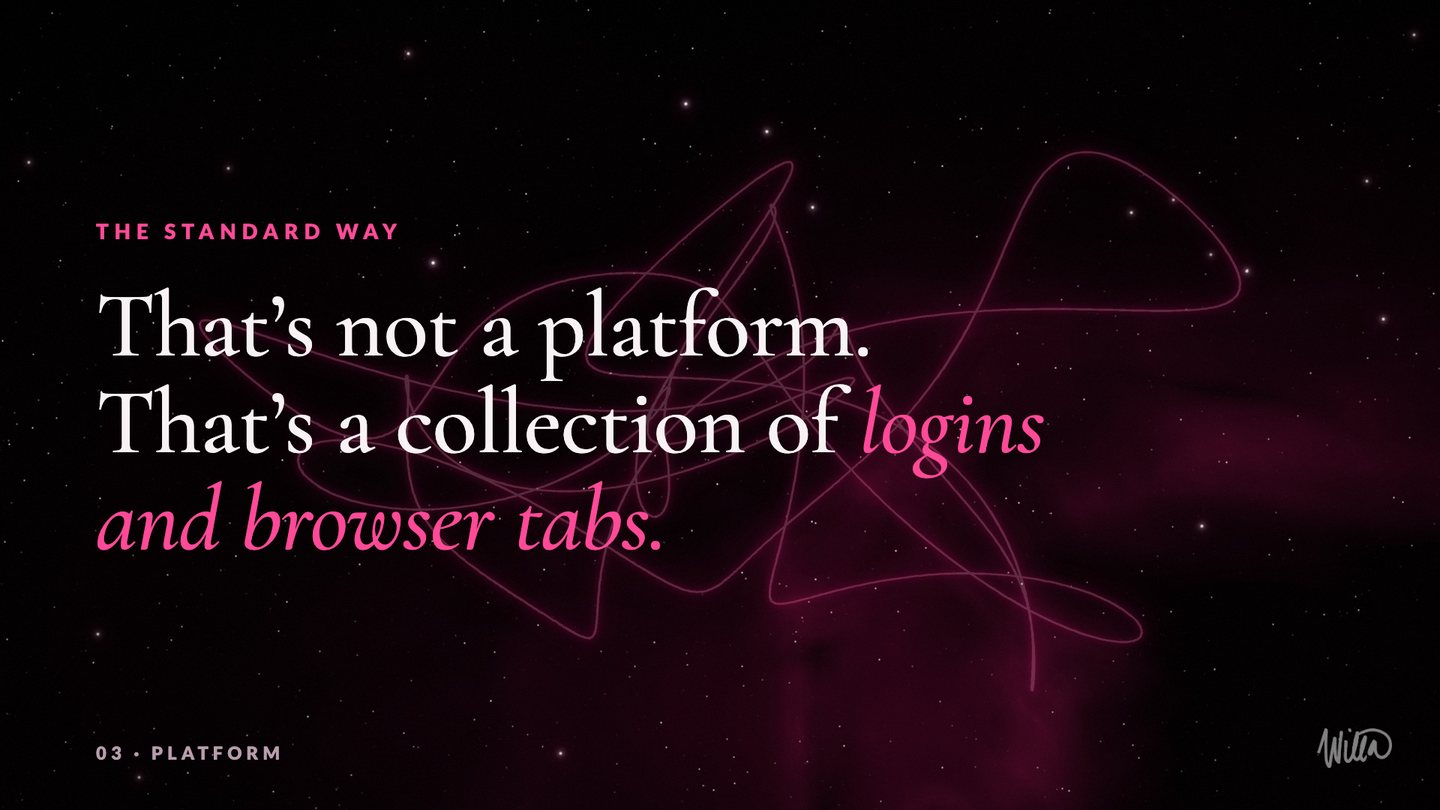
That's not a platform. That's a collection of logins and browser tabs. Every handoff between tools is a place where a lead can fall through, a follow-up can fail to send, or a buyer can feel like they've landed somewhere that isn't you.
A social media following isn't a platform either. It matters, and it's often where people discover you, but you're renting it. You don't control the reach, the rules or the relationship. Your platform is the part you own.
Do you need one?
If you want to be known for what you do and turn attention into clients, yes. That doesn't mean building everything at once. The platform we build first is small and strong: one personal brand page that earns trust and one funnel that converts, connected to an email list. You add a sales page, a book funnel or a course when the business is ready for them, on the same foundation.
Brand and tech as one system
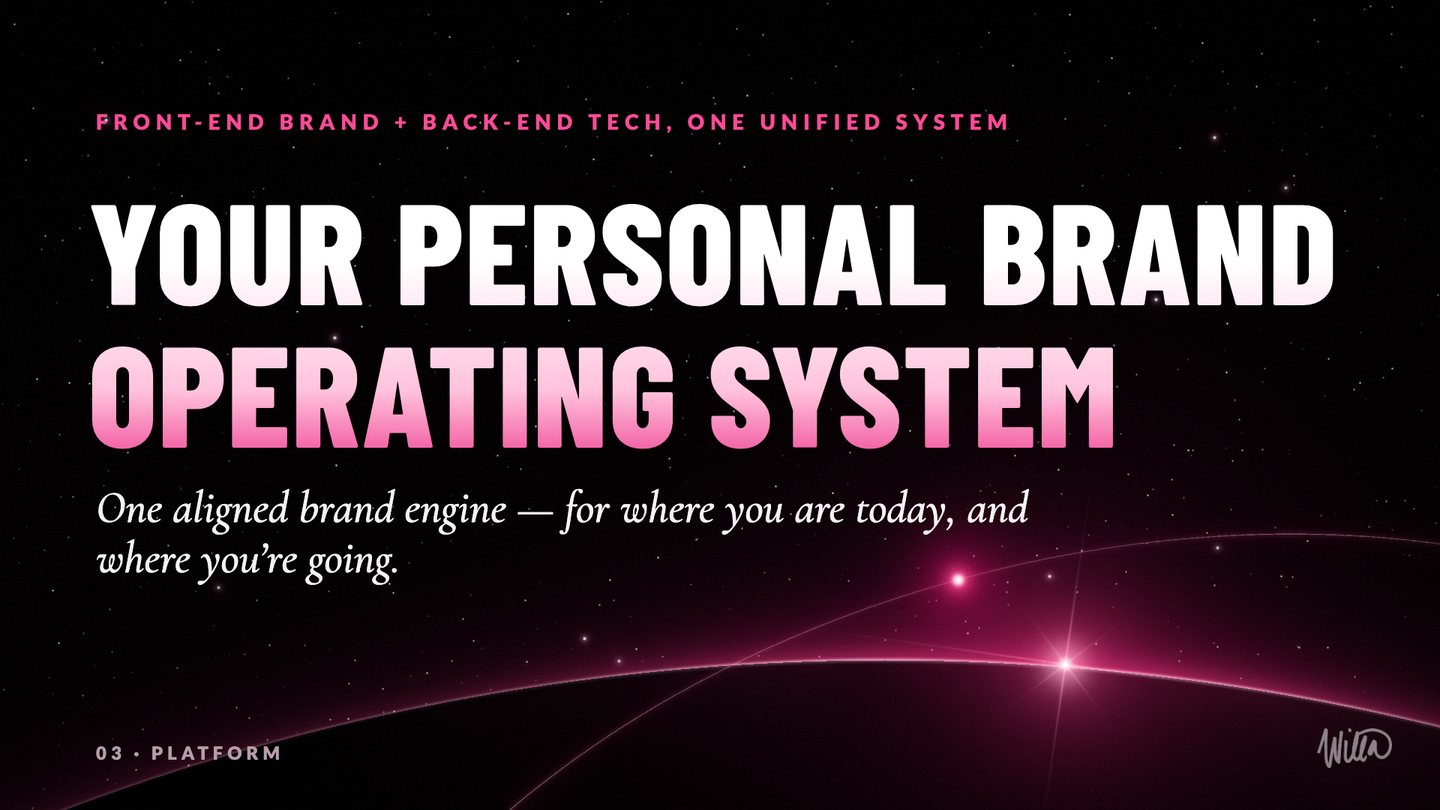
What changed everything for us at Firestarter was putting the front-end brand and the back-end tech on one platform. I call it your Personal Brand Operating System: one aligned brand engine for where you are today, and scalable for where you're going. We build it on Firestarter Funnels, our all-in-one platform powered by HighLevel, so the website, funnels, email, CRM, checkout and courses live in one place.
Whatever you build on, the principle is the same: build the brand and the system behind it together, so you can focus on the impact you're here to make. It's also why identity comes first. A platform is only as powerful as the identity it's built from.